Caliswave: The Retro-Modern Typeface That Pops Off the Page
Imagine you're scrolling through a crowded social media feed, skimming past hundreds of posts that all seem to blend into a blur of safe, minimalist sans-serifs. Suddenly, a logo catches your eye—a coffee shop or perhaps a boutique clothing brand—where the letters seem to dance. They have a distinct, undulating rhythm that feels familiar yet fresh, evoking a sense of nostalgia while remaining undeniably modern. That instant recognition, that feeling of "vibe" before you even read the words, is the power of a strong display typeface. In a digital landscape saturated with uniformity, finding a typeface that offers personality without sacrificing clarity is like striking gold for a designer or brand owner.
Capturing the Retro-Modern Aesthetic
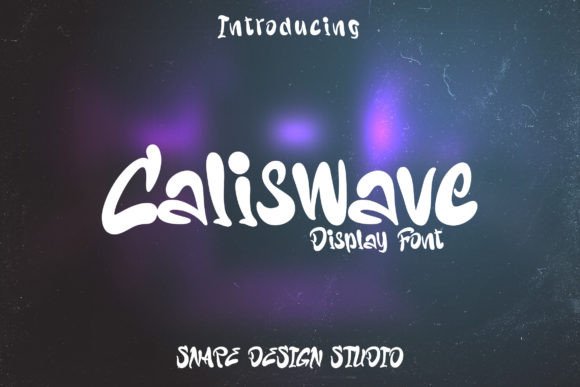
Enter Caliswave, a cool and unique display font that walks the fine line between playful whimsy and professional polish. At its core, Caliswave is defined by its wavy and quirky glyphs. It isn't just a standard serif or sans-serif with a filter applied to it; the letterforms are constructed with intentional curvature and movement. This gives the typeface a "liquid" feel, reminiscent of groovy 1970s typography, but rendered with the sharpness and clean lines expected in modern graphic design.
For the creative professional, the appeal lies in its versatility as a stylistic anchor. If you are working on a project that requires a "special, retro touch," Caliswave provides that aesthetic immediately. It avoids the cliché look of generic "vintage" fonts that often look dated or worn out. Instead, Caliswave feels retro-futuristic. It’s the kind of typography you might see on a trendy vinyl record sleeve, a high-end festival poster, or the branding for a surf shop that also sells premium espresso. The visual weight of the font is substantial enough to command attention in headlines, making it an ideal candidate for logo design where distinctiveness is paramount.
Strategic Applications for Brand Identity
When building a brand identity, consistency is the currency of trust. However, consistency doesn't mean boring. A typeface like Caliswave allows a brand to maintain a cohesive look across various touchpoints while injecting energy into the visual communication. Consider a small business owner launching a new line of artisanal sodas. Using Caliswave for the logo establishes a fun, approachable personality immediately. That same font can then carry over to the packaging design, creating a visual language that connects the bottle on the shelf to the advertisement on Instagram.
The utility of this display font extends far beyond logos. In the realm of social media graphics, where grabbing attention is a split-second endeavor, Caliswave acts as a visual hook. It is perfect for quote graphics, announcement headers, or sale banners. Because the glyphs have such a distinct character, they add texture to flat digital layouts. For content creators and bloggers, utilizing Caliswave for section headers or "Pin" graphics can significantly increase click-through rates. It breaks up the monotony of standard body text and signals to the reader that the content is curated and intentional.
Furthermore, the font translates beautifully into physical print materials. Imagine a set of business cards where the name is emblazoned in Caliswave; it creates a tactile and memorable first impression. Event planners and stationery designers will find it particularly useful for invitations to parties, weddings with a retro theme, or music events. It sets the mood before the guest even reads the date and time. Even in merchandise—think t-shirts, tote bags, or stickers—a wavy, quirky typeface often resonates better with younger demographics (Gen Z and Millennials) who appreciate irony, nostalgia, and distinct visual flair.
Pairing and Practicality
One of the most common pitfalls in using a display font is the "Christmas Tree Effect," where the design is so loud that it becomes unreadable. Caliswave is a strong personality, so it requires a grounding partner. This is where the art of font pairing comes into play. Because Caliswave has high visual interest, it pairs exceptionally well with clean, neutral typefaces. A simple geometric sans-serif for body copy allows Caliswave to shine in the headlines without competing for attention. Conversely, if you are going for a maximalist editorial look, pairing it with a traditional serif can create an interesting tension between classic structure and fluid motion.
However, designers must pay close attention to readability. While Caliswave is legible at larger sizes, such as those used in posters and headers, it is not designed for long-form body text. The quirky nature of the glyphs, which makes them so appealing for display purposes, can cause eye fatigue if used for small paragraphs. It is best to view this typeface as a specialist tool for high-impact moments. Use it to draw the eye in, then hand the reader off to a more neutral font for the details.
Licensing and Asset Management
For those looking to incorporate this asset into their professional toolkit, understanding the licensing is crucial. Caliswave is typically available as a commercial font, meaning it is cleared for use in projects that generate revenue—whether that’s client work, merchandise sales, or digital products. Always review the specific license agreement to ensure it covers your intended use cases, such as embedding the font in apps or using it on high-volume print runs.
Additionally, check the variety of font styles included in the package. Many premium display fonts come with variations—such as bold, italic, or outline versions—that can expand your creative options. Having these variations allows you to create hierarchy within your typography without introducing a foreign visual element that clashes with the core aesthetic.
Ultimately, typography is about communication, but it is also about feeling. Caliswave offers a way to communicate joy, nostalgia, and creativity simultaneously. It is a design asset that doesn't just hold text; it transforms it into a visual experience. Whether you are designing a website header, a poster for a local event, or branding for a new startup, having a typeface that brings this much personality to the table ensures your work won't just be seen—it will be remembered.