Chendolle: The Playful Display Font for School Projects
You know that feeling when you're working on a project and something just clicks into place? That's what happened the first time I used Chendolle. I was designing a reading program flyer for my daughter's elementary school, and the standard fonts felt too corporate, too serious, too... adult. Then I found Chendolle, and suddenly the whole design had personality. It was friendly without being sloppy, playful without being unprofessional, and it perfectly captured the spirit of a program designed to get kids excited about books.
A Typeface with Genuine Character
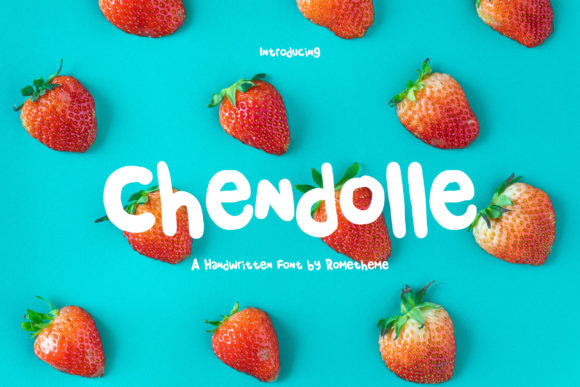
Chendolle is a fun and quirky display font with a distinctly youthful energy. Its slightly irregular letterforms and rounded edges give it a hand-drawn quality that feels approachable and warm. Unlike many decorative fonts that sacrifice readability for style, Chendolle maintains excellent clarity even at larger sizes, which is exactly what you need for headlines, titles, and short bursts of text that need to grab attention.
What makes this particular typeface stand out is its balance. It's childish in the best possible way—evoking crayons, playgrounds, and creative exploration—without crossing into territory that looks amateurish. The letter spacing is thoughtful, the weight distribution feels intentional, and there's a subtle consistency in its "imperfections" that signals good design rather than carelessness. This is a font that understands its personality and commits to it fully.
Where Chendolle Really Shines
I've used Chendolle across a surprising variety of projects, and it continues to impress me with its versatility. Here's where I've found it works best:
- School and educational materials – Reading logs, classroom posters, bulletin board headers, award certificates, and program brochures all benefit enormously from its friendly demeanor.
- Children's birthday invitations and party supplies – The font practically begs to be used on invitations, thank-you cards, and decorations for kids' events.
- Youth-oriented branding – After-school programs, tutoring services, children's book covers, and family-friendly businesses can build a complete visual identity around this typeface.
- Social media graphics – Instagram posts promoting kids' events, Pinterest pins for parenting blogs, and Facebook graphics for school fundraisers all look more engaging with Chendolle in the mix.
- Packaging and merchandise – Think about children's snack packaging, toy labels, or custom t-shirts for a school field day. This font adds instant charm.
- Blog headers and digital products – Parenting bloggers, teacher-creators selling resources on Teachers Pay Teachers, and anyone designing printable worksheets will find Chendolle adds that perfect finishing touch.
I once designed a series of bookmarks for a local library's summer reading challenge using Chendolle for the titles. The librarians told me kids were actually excited to pick them up, and several parents asked where the design came from. That's the kind of response a well-chosen display font can generate—it creates an emotional connection before anyone reads a single word of your content.
Pairing Chendolle with Other Fonts
Here's where practical design knowledge really matters. A display font like Chendolle is designed for impact, not for body text. You wouldn't set a full paragraph in it any more than you'd write an entire email in capital letters. The key is pairing it thoughtfully with complementary typefaces.
For body copy, I've had great success combining Chendolle with clean sans serif fonts like Open Sans, Lato, or Nunito. These neutral companions let Chendolle's personality shine in headlines while keeping longer text blocks easy to read. If you want a slightly warmer feel for your body text, consider a friendly serif like Merriweather or Literata—they share some of Chendolle's approachable quality without competing for attention.
The general rule with font pairing is contrast without conflict. Chendolle is round, playful, and informal, so your secondary font should offer a different energy—perhaps more structured, more neutral, or more refined. Avoid pairing it with other heavily stylized display fonts, or your design will feel chaotic rather than cohesive.
Building Visual Consistency Across Projects
One of the most overlooked aspects of branding—whether for a school, a small business, or a personal project—is consistency. When you choose Chendolle as your primary display typeface and commit to using it across all your materials, you create a recognizable visual thread that ties everything together.
Imagine a tutoring business that uses Chendolle on its logo, website headers, business cards, social media templates, invoice headers, and student handouts. Every touchpoint reinforces the same friendly, approachable personality. Parents begin to associate that visual style with the brand before they even consciously recognize the font. That's brand recognition in action, and typography is one of the most powerful tools for building it.
This principle applies equally to school projects. A classroom that uses consistent typography across its bulletin boards, handouts, newsletters, and digital presentations feels more polished and intentional. It signals to students, parents, and administrators that thought and care went into the communication.
Practical Considerations Before You Commit
Before you dive into using Chendolle for everything, a few practical notes are worth considering:
Review the included styles and character set. Check whether the font includes the punctuation marks, numbers, and special characters your project requires. Some display fonts have limited character sets, which can cause problems if you need accented characters for multilingual content or specific symbols for mathematical or scientific materials.
Test at your actual output size. Display fonts are meant for larger text, but the specific size that looks best can vary. Set a few test headlines at the sizes you'll actually use—whether that's 48-point text on a poster or 24-point text on a social media graphic—and evaluate the results on screen and, if applicable, in print.
Check the licensing terms. If you're using Chendolle for commercial purposes—selling products, creating client work, or distributing printed materials—make sure your license covers that use. Most premium fonts offer different licensing tiers, and understanding the terms upfront prevents headaches later. This is especially important for designers working with multiple clients or small business owners creating merchandise for sale.
Consider your audience's expectations. Chendolle is a creative font with a strong personality. For a children's literacy program, a kids' clothing brand, or a family-friendly event, it's a natural fit. For a law firm's annual report or a medical practice's patient intake forms, it would be wildly inappropriate. Matching your typography to your audience's expectations is just as important as matching it to your aesthetic preferences.
Making the Most of a Display Typeface
Display fonts like Chendolle are design assets that reward thoughtful use. They work hardest when they're given space to breathe—set against clean backgrounds, surrounded by generous margins, and paired with simpler design elements that don't compete for visual attention.
I've seen designers make the mistake of layering too many decorative elements around an already expressive font. The result is visual noise that overwhelms rather than engages. With Chendolle, let the typography be the star. Use solid or subtly textured backgrounds, limit your color palette, and keep supporting design elements minimal. The font has enough personality to carry a design on its own merits.
Whether you're a teacher creating materials for your classroom, a parent designing party invitations, a small business owner building a brand around a youthful product, or a designer working on an editorial layout for a children's publication, Chendolle offers something genuinely useful: a typeface that communicates warmth, creativity, and approachability without requiring any additional explanation. Sometimes the right font doesn't just complement your message—it becomes part of it.