Progreso: The Fresh Sans Serif for Bold, Modern Branding
There’s a moment in every design project where the typeface either lifts the entire concept or quietly undermines it. You’ve spent hours on the color palette, the imagery, the layout—and then you pick a font that feels safe, expected, and forgettable. That’s where a typeface like Progreso changes the game. It’s not just another clean sans serif; it’s a statement piece, designed for work that needs to feel confident, contemporary, and unmistakably bold.
More Than Just Clean Lines
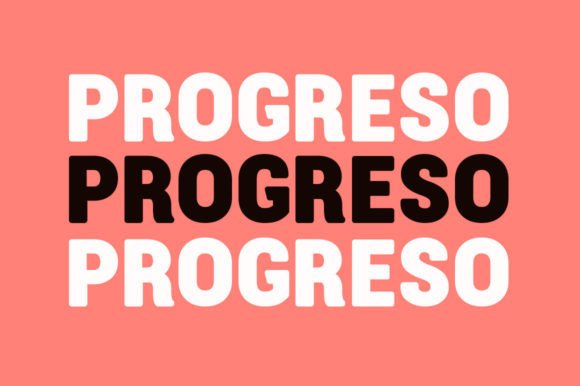
At first glance, Progreso presents itself with the clarity and simplicity you’d expect from a modern display font. But spend a little time with it, and you’ll notice the subtle details that give it personality. The letterforms have a geometric foundation, but they’re softened with just enough humanist touches to avoid feeling sterile. This balance is what makes it so versatile—it can look sleek and professional in a corporate context, yet feel energetic and approachable for a lifestyle brand.
The “fresh and clean” descriptor isn’t marketing fluff here. Progreso genuinely feels contemporary. It avoids the overly rounded, friendly vibe that’s dominated sans serifs for years, and it doesn’t lean into the ultra-thin, high-fashion aesthetic that can sacrifice readability. Instead, it occupies a smart middle ground: authoritative without being aggressive, stylish without being trendy in a way that will date quickly. This is the kind of typeface that works for a tech startup’s landing page today and still feels relevant for their rebrand in five years.
Practical Applications Across Your Projects
So where does a font like Progreso actually fit into your workflow? The answer is almost everywhere, but with intention. Its strength as a display typeface means it shines brightest where you need to make an immediate impact.
Branding & Logo Design: This is Progreso’s home turf. Use it to set a brand name that needs to own its space—think product packaging for a new craft beverage, a logo for a sustainable fashion label, or the masthead for a design-forward blog. Its bold weights are perfect for creating a monogram or wordmark that’s instantly recognizable.
Digital & Social Media: In the fast-scrolling world of Instagram, TikTok, and LinkedIn, you have milliseconds to grab attention. Progreso’s strong presence makes it ideal for social media graphics, website headers, and video thumbnails. It ensures your message isn’t just seen, but remembered. Pair it with a simple sans serif for body text on your website, and you create a clear, professional hierarchy that guides the reader’s eye.
Print & Physical Goods: Don’t limit it to the screen. Progreso translates beautifully to print. Imagine it on a poster for a local event, the cover of a report or magazine, or the branding on a tote bag. Its clean lines ensure legibility even at smaller sizes, making it a reliable choice for business cards, letterheads, and product labels where space is at a premium.
Making It Work for Your Brand
Choosing a font is a strategic decision, not just an aesthetic one. Here’s how to think about integrating a typeface like Progreso effectively.
Define Your Font’s Role: Is Progreso going to be your primary display font, used only for headlines and logos? Or will you use multiple weights for different levels of emphasis? Knowing its role upfront prevents visual clutter. A common and effective approach is to use a bold or semibold weight of Progreso for major headlines, and pair it with a highly readable, neutral sans serif (like a humanist sans serif) for paragraphs and longer text.
Test for Readability: Always test your chosen weight and size in context. How does the bold weight look on a mobile screen? Is the regular weight legible when printed small on a business card? Progreso’s design is generally very legible, but real-world testing is non-negotiable. Create a mockup of your website header, a social media post, and a business card layout before finalizing.
Explore the Included Styles: A premium font family often comes with more than just regular and bold. Check if Progreso includes italics, multiple weights (light, medium, semibold, black), or stylistic alternates. These additional styles give you more tools to create nuance and hierarchy within your designs without introducing a second typeface, which helps maintain visual consistency across all your brand assets.
The Bigger Picture: Consistency and Recognition
Using a distinctive, well-crafted typeface consistently is one of the fastest ways to build brand recognition. When your audience sees that specific letter ‘G’ or the unique curve of the ‘S’ in Progreso, they start to associate it with your business. This visual shorthand is powerful. It turns your typography from a passive element into an active part of your brand identity.
This consistency also signals professionalism. Whether a customer encounters your brand on a website, a package, or a social media ad, the unified use of typography tells them you pay attention to details. It builds trust. In a crowded market, that level of polish can be the deciding factor between someone clicking “learn more” or scrolling past.
Remember, the goal isn’t to use the most complex or artistic font. It’s to choose a typeface that communicates your brand’s personality clearly and reliably. Progreso, with its blend of modern clarity and bold character, is built for exactly that kind of purposeful communication. It’s a design asset that does more than decorate—it helps define.