Rings: A Display Font That Commands Attention
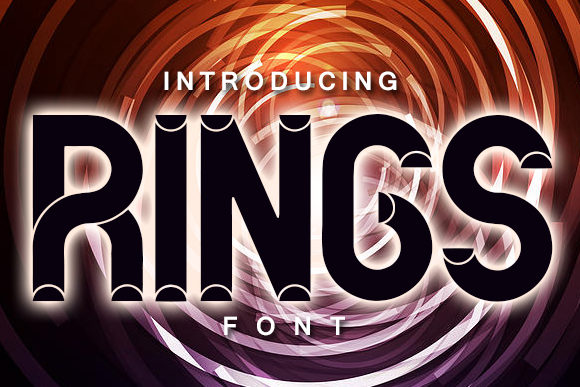
There's a specific moment in every design project where the typography either disappears into the background or steps forward to claim its own spotlight. If you've ever struggled to find a typeface that does the latter—truly owning the space it occupies without shouting over the rest of your design—then Rings deserves a serious look. This is a bold, incredibly unique display font that was masterfully designed to become a true favorite, and once you start working with it, you'll understand why it has the potential to bring each of your creative ideas to the highest level.
A Typeface With Genuine Presence
Rings isn't trying to be everything to everyone, and that's precisely what makes it effective. It occupies a specific lane in the world of modern typography: a display font built for impact. Think about the last time a piece of packaging caught your eye from across a store shelf, or a social media graphic stopped you mid-scroll. Chances are, the typography played a significant role in that reaction. Rings is engineered for exactly those moments.
What sets this typeface apart visually is its confidence. The letterforms carry a weight and structure that feel intentional—every curve, every stroke, every proportion has been considered. It doesn't lean on gimmicks or trendy effects. Instead, it relies on solid design fundamentals executed with a distinctive personality. The result is a font that reads as both contemporary and timeless, which is a surprisingly rare combination in the world of premium fonts.
Where Rings Truly Shines
Let's get practical. A beautiful typeface is only valuable if it actually works in real-world applications. Rings excels across a surprisingly wide range of creative projects, and understanding where it fits best will help you get the most out of it.
Logo design and brand identity are natural homes for a display font like this. If you're building a brand from scratch or refreshing an existing one, Rings gives you a strong visual anchor. It works particularly well for brands that want to project confidence, creativity, or a sense of premium quality. A boutique coffee roaster, a contemporary fashion label, a creative agency, a specialty food brand—these are the kinds of businesses where Rings can become the visual backbone of an entire identity system.
Packaging design is another area where this font earns its keep. On a shelf crowded with competing products, typography is often the first thing a consumer processes. Rings has the kind of visual weight that creates instant hierarchy on a label or box. Use it for product names, taglines, or key callouts, and pair it with a cleaner body font for descriptions and regulatory text.
For social media graphics, Rings solves a common problem: how to create thumb-stopping content that still looks polished. Instagram posts, Pinterest pins, YouTube thumbnails, and Facebook headers all benefit from bold, readable typography that establishes mood quickly. A single word set in Rings can carry an entire graphic.
Building Visual Consistency Across Platforms
One of the most overlooked aspects of professional design is consistency. Your audience encounters your brand across dozens of touchpoints—your website, your email newsletters, your printed materials, your social feeds, your product packaging. When the typography shifts constantly between random fonts, the overall impression feels disjointed and amateur.
Rings helps solve this by giving you a recognizable visual thread to weave through all of these contexts. When someone sees your headline font on Instagram, then encounters the same typeface on your website and again on a printed flyer, that repetition builds brand recognition. It's a simple principle, but it requires choosing a font versatile enough to work across different mediums while maintaining its character. Rings handles that challenge well.
This consistency extends to editorial layouts and blog design too. If you run a publication—digital or print—having a distinctive display font for headlines and pull quotes creates a reading experience that feels curated rather than generic. Pair Rings with a clean sans serif font for body text, and you've got a typographic system that looks intentional and professional.
Matching Typography to Your Project Goals
Before you start using Rings—or any display font—it's worth pausing to think about what you're actually trying to communicate. Typography isn't decoration. It's a communication tool, and the style you choose sends a message before anyone reads a single word.
Ask yourself a few questions. What's the mood of this project? Who's the audience? Where will they encounter this design? If you're creating an invitation for a gallery opening, Rings might be perfect for the headline with a script font handling the details. If you're designing a poster for a music festival, Rings could anchor the entire layout. If you're building a website for a tech startup, it might work for hero section headlines while a geometric sans serif handles navigation and body copy.
The key is intentionality. Don't choose a bold display typeface because it looks cool in isolation. Choose it because it serves the specific goals of your project. When the font personality aligns with the brand personality, the design feels effortless. When there's a mismatch, even beautiful typography feels off.
Practical Tips for Working With Display Fonts
If you're newer to working with bold display typefaces, here are some observations that might save you time and frustration.
Test your font pairings early. Don't spend hours perfecting a layout only to discover that your headline and body fonts clash. Set up a quick pairing test—just a headline and a paragraph—and evaluate how they look together at different sizes. Rings pairs well with both serif and sans serif fonts, so experiment with combinations before committing to a direction.
Respect readability boundaries. Display fonts are designed for headlines, titles, and short bursts of text. They're not meant for long paragraphs. Using Rings at a small size for body copy would undermine its strengths. Let it do what it does best—command attention at larger sizes—and use a more neutral font for extended reading.
Review all the included styles. A well-designed font family often includes alternates, ligatures, or stylistic variations that can dramatically change the look of your text. Take time to explore everything that comes with the font. Those extra characters and options are there for a reason, and they might be exactly what your project needs.
Consider your commercial licensing. If you're using Rings for client work, merchandise, or any project that generates revenue, make sure you understand the licensing terms. Most premium fonts offer commercial licenses, but the specifics vary. It's a small detail that protects both you and the font designer.
Design Assets That Earn Their Place
Every designer, entrepreneur, and content creator builds a personal library of go-to tools—fonts, color palettes, templates, textures. The assets that stick around are the ones that prove their value across multiple projects. Rings has that kind of versatility. It's not a one-trick font that only works for a single aesthetic. Its bold personality adapts to different contexts, whether you're designing merchandise for an online shop, creating marketing assets for a product launch, or laying out a digital product like an ebook or workbook.
The fonts you invest in shape the quality of your work. A thoughtful collection of typefaces—including at least one strong display option like Rings—gives you the flexibility to approach each new project with confidence, knowing you have the right tools to communicate your vision clearly and professionally.